
Effective employer research requires combining multiple sources — LinkedIn, Glassdoor, Crunchbase, and news coverage — since no single platform reveals the full picture of a company's culture, financial health, or team stability. Organizing findings into a scored framework (rating criteria like role clarity, manager quality, and financial stability on a 1–5 scale) removes bias and enables side-by-side comparison of multiple employers. Using that research to ask specific, informed interview questions — such as probing why a role opened or how recent funding changes hiring plans — separates well-prepared candidates and surfaces red flags that job descriptions never mention.
In this article
Employer research is the process of gathering verified data from multiple sources to assess a company’s culture, values, financial health, and work environment before accepting a role. Done well, it prevents costly career mistakes and gives you a clear picture of what daily work actually looks like. The best ways to research companies combine platforms like LinkedIn, Glassdoor, Crunchbase, and a company’s own website into one structured process. This guide walks you through every step, from picking the right tools to scoring what you find and using it in interviews.
What Tools and Sources Should You Use to Research Employers?
A multi-channel research approach is the most reliable way to build an accurate picture of any employer. No single source tells the full story. Each platform reveals a different layer of the company.
Here is how the major sources compare:
| Source | Type of information | Access level | Reliability |
|---|---|---|---|
| Company website | Mission, products, culture claims | Public | Low to medium (self-reported) |
| Employee profiles, tenure, leadership changes | Free/paid | Medium to high | |
| Glassdoor | Salary data, employee sentiment, CEO ratings | Free/paid | Medium (self-selected) |
| Crunchbase | Funding rounds, revenue stage, investor info | Free/paid | High for funding data |
| News and industry press | Layoffs, acquisitions, leadership moves | Public | High |
| Social media (X, Instagram) | Brand voice, culture signals, public response | Public | Low to medium |
LinkedIn is the strongest tool for evaluating leadership tenure and changes, which directly affect team stability. A VP of Engineering who has been in the role for eight months after three predecessors in four years is a red flag no job description will mention. Crunchbase fills in the financial picture, especially for startups where runway and investor backing determine whether your role exists in 12 months.

Candidates consistently underestimate the company’s own hiring page as a data source. A company posting the same role repeatedly over several months signals either high turnover or an unrealistic hiring bar. Both matter to you.
Pro Tip: Cross-reference at least three sources before forming an opinion. A glowing website paired with six months of negative Glassdoor reviews and a recent round of layoffs in the news tells a very different story than any one source alone.
How to Evaluate and Score Employer Data for Decision-Making
Raw research data is only useful when you organize it. A research scorecard using 1–5 scales on defined criteria removes gut-feel bias and lets you compare multiple employers side by side.
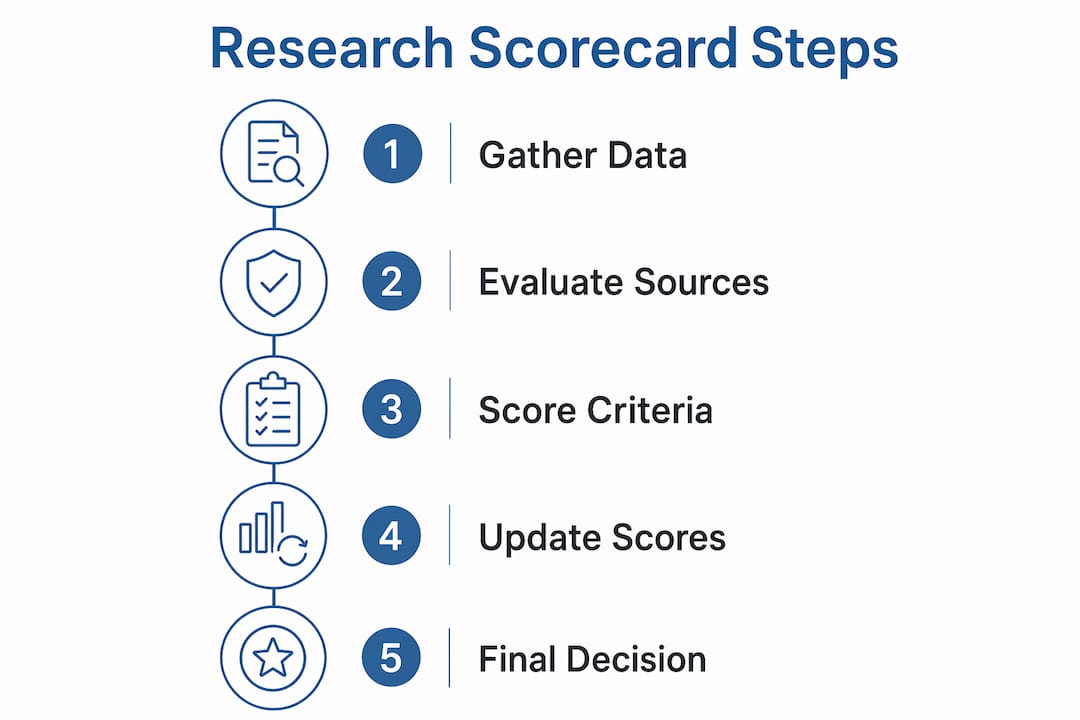
Here is a sample scorecard framework:
| Criterion | Score (1–5) | Notes |
|---|---|---|
| Role clarity | Is the job description specific or vague? | |
| Manager quality | LinkedIn tenure, team reviews, promotion history | |
| Financial stability | Funding stage, revenue signals, Crunchbase data | |
| Workload signals | Review themes, job posting frequency | |
| Growth potential | Internal promotion rate, team size trajectory |
Update the scorecard after each research phase and again after every interview round. Scorecards updated iteratively capture evolving insights and reduce confirmation bias, which is the tendency to favor information that confirms what you already want to believe.
One underused data point is whether a role is a backfill or a newly created position. Identifying backfill versus new roles changes your early expectations significantly. A backfill means someone left, and you should find out why. A new role means the team is growing, but the scope may still be undefined.
Healthy teams also show a pattern of internal promotions and reasonable management spans. Inflated titles or short tenures on LinkedIn suggest instability, not opportunity. If every senior manager has been in their role for under a year, that pattern deserves a direct question in your interview.
Pro Tip: Score each employer the same day you research them. Memory fades fast, and delayed scoring introduces bias from more recent conversations.
How to Prepare Insightful Questions Using Your Research
Research only pays off if you use it. The best employer research tips point to one consistent truth: specific questions about company strategy signal preparation and reveal far more than generic culture questions.
Prepare 3–5 questions drawn directly from your research. Strong examples include:
- “What prompted this role to open now?” (Reveals backfill vs. growth, and tests transparency)
- “How has the team’s structure changed in the past 12 months?” (Surfaces reorganizations or leadership gaps)
- “What does success look like in the first 90 days, and how is it measured?” (Tests role clarity and manager quality)
- “How does the company communicate major decisions to individual contributors?” (Probes leadership transparency)
- “What is the biggest challenge the team is working through right now?” (Opens a real conversation about current priorities)
Effective research helps job seekers frame their interview answers to align with actual business challenges, which separates top candidates from those who give generic responses. When you know from Crunchbase that a company just closed a Series B, you can ask how that funding changes the team’s hiring plan. That question demonstrates business awareness most candidates skip entirely.
The interview process itself is also a data point. Chaotic scheduling or unprepared interviewers correlate with poor internal communication. If three people reschedule your first call and no one has read your resume, that behavior reflects how the company runs projects, not just how it hires.
Common Pitfalls When Evaluating Employers
Most employer research mistakes fall into one of four categories. Recognizing them early saves time and prevents bad decisions.
-
Relying only on company-controlled content. A polished careers page and a compelling mission statement are marketing. They tell you what the company wants you to believe. Always validate claims with external sources like Glassdoor, LinkedIn employee reviews, and recent press coverage before drawing conclusions.
-
Misreading employee reviews. One five-star review and one one-star review cancel each other out. What matters is consistent themes over 6–12 months. Repeated mentions of unclear priorities, slow feedback loops, or poor management across dozens of reviews are reliable signals. A single angry post from a terminated employee is not.
-
Ignoring job posting patterns. A role that has been open for four months on LinkedIn and Indeed simultaneously may indicate a hard-to-fill position or high turnover in that team. Long-open roles can provide negotiation leverage and prevent surprises after you start.
-
Accepting advertised values at face value. A company that lists “flexibility” as a core value but requires badge-in data and penalizes remote days is not flexible. Seek verifiable examples of advertised values backed by current employee data, not just policy language on a website. Ask directly in the interview how the value shows up in daily practice.
A consistent research process also protects you from information overload. Jumping between sources without a framework leads to scattered notes and no clear conclusion. The scorecard method described earlier solves this directly.
Key Takeaways
Structured, multi-source employer research is the most reliable way to evaluate company culture, financial health, and role fit before accepting a job offer.
| Point | Details |
|---|---|
| Use multiple sources | Combine LinkedIn, Glassdoor, Crunchbase, and news media for a complete employer picture. |
| Score what you find | Apply a 1–5 scorecard across criteria like role clarity, manager quality, and financial stability. |
| Ask specific questions | Prepare 3–5 research-based interview questions to test transparency and confirm your findings. |
| Read review patterns | Focus on consistent themes over 6–12 months in employee reviews, not isolated opinions. |
| Watch the hiring process | Scheduling chaos and unprepared interviewers are reliable signals of internal communication problems. |
What Structured Research Actually Changes
After working in recruiting for years, the pattern I see most often is this: candidates who do thorough research do not just make better decisions. They negotiate better offers, ask better questions, and start new roles with realistic expectations. The ones who skip research are the ones calling us six months later because the job was nothing like the interview suggested.
The scorecard approach changed how I advise candidates. Before it, most people made decisions based on how excited they felt after the final interview. That feeling is real, but it is not data. Scoring role clarity, manager quality, and financial stability forces you to confront what you actually know versus what you are hoping is true.
The interview logistics point is one I cannot stress enough. I have seen candidates overlook three reschedules, a no-show, and an interviewer who clearly had not read the job description, only to accept the offer and discover the team runs exactly that way. The hiring process is a free sample of the company’s culture. Use it.
Digital tools like LinkedIn and Crunchbase have made employer background check research faster than it has ever been. There is no excuse for going into an offer decision with incomplete information. The data is there. The framework is straightforward. The only variable is whether you use it.
— Chris
How Careerscape Can Support Your Job Search
Careerscape, connects qualified professionals with companies that are ready to hire. Beyond matching resumes to job descriptions, Careerscape’s recruiters bring direct knowledge of employer culture, team dynamics, and role expectations that public research cannot always surface. If you are evaluating employers in a specific industry, working with a specialized recruiter gives you an inside view before the first interview. Explore Careerscape’s contract staffing solutions for flexible roles, or browse industry-specialized recruiting to find employers that match your expertise and career goals.
FAQ
What Is Employer Research and Why Does It Matter?
Employer research is the process of gathering data from multiple sources to assess a company’s culture, values, financial health, and work environment. It helps job seekers make informed decisions and avoid accepting roles that do not match their expectations.
What Are the Best Sources for Researching a Company?
LinkedIn, Glassdoor, Crunchbase, company websites, and industry news are the most reliable sources. Each provides a different type of information, so using all of them together gives the most complete picture.
How Do I Evaluate Employee Reviews Without Being Misled?
Focus on consistent themes over 6–12 months rather than isolated extreme opinions. Repeated mentions of specific issues like unclear priorities or poor management are more reliable than a single negative post.
How Can I Use My Research During the Interview?
Prepare 3–5 specific questions drawn from your research on company strategy, team structure, and role expectations. Specific interview questions demonstrate preparation and reveal information that generic culture questions miss.
What Does a Long-Open Job Posting Signal?
A role open for several months may indicate high turnover, a hard-to-fill position, or an unrealistic hiring bar. This information can also provide negotiation leverage once you reach the offer stage.
Recommended
- Job Hunting Strategies 2026: Win the Hidden Market
- The Financial Reality of Job Seekers in 2026 | Careerscape
- Job Posting Optimization: A 2026 Recruiter’s Guide
- Steps to Effective Job Posting for Recruiters in 2026