
When receiving a counteroffer, treat it as a new offer and promptly review all terms, financing, and contingencies since the original offer is voided. Respond within the designated 24-72 hour window by either accepting, rejecting, or countering, with careful consideration of all negotiable terms like price, closing dates, and contingencies. Buyers should be cautious of shortened timelines and ensure they understand their financial limits, while sellers can strategically manage multiple offers to maximize their outcomes.
- Counteroffer deadlines often last one to three days, but competitive markets can compress them to hours, so ask your agent about active competing bids immediately.
- Check revised financing and every contingency deadline, especially inspection and financing windows, because shortened timelines can limit your ability to withdraw cleanly.
- Price is only one bargaining point; buyers and sellers can trade closing dates, possession, repair credits, earnest money, and included fixtures independently.
- If the appraisal falls below the contract price, request a reduction, bring cash to cover the gap, or use an appraisal contingency to exit.
- Later counters in the response window often improved final prices and reduced impasse risk; highly ambitious demands increased the chance talks would fail.
In this article
If you receive a counteroffer, treat it as a brand-new offer: review every term, confirm your financing and contingencies are still intact, and respond before your deadline with one of three moves: accept, reject, or counter. The original offer no longer exists once a counteroffer arrives, so speed and clarity matter more than emotion in the next 24 to 72 hours.
What a counteroffer is and its legal effect
A counteroffer is not a revision of the original agreement. It’s a new offer entirely, and submitting one legally voids whatever came before it. Once either party counters, the earlier terms disappear, and neither side can fall back on them if talks stall. Cornell Law’s entry on counteroffers confirms this: each counter restarts the clock, and the party who countered no longer has a prior offer to accept if negotiations break down.
That legal reset carries practical weight. Buyers who counter a seller’s counteroffer are essentially betting that a better deal is worth losing their place in line, because the seller remains free to accept a competing offer in the meantime.
Response windows vary by market, but Redfin’s buyer guide notes that negotiations often span one to three days, though competitive markets can compress that window to hours. Agents play a defined role in keeping this process honest. Under NAR’s guidance on multiple-offer negotiations, REALTORS® must present all offers and counteroffers objectively and as quickly as possible, and disclose the status of competing offers when asked.
What this means for your next step:
- Confirm the counteroffer’s deadline the moment you receive it, since missing it can forfeit your position.
- Ask your agent to clarify whether any competing offers are active before you counter.
- Document every version of the offer in writing, since verbal changes carry no legal weight.
Common terms people negotiate in counteroffers
Price gets the headlines, but most counteroffers trade on several levers at once. Knowing which ones matter to you before you negotiate keeps you from giving up ground you didn’t need to.
- Price and earnest money: sellers often counter with a higher price or request a larger earnest money deposit to signal buyer commitment.
- Contingencies: inspection, appraisal, financing, and home-sale contingencies each carry deadlines that either party can shorten, lengthen, or remove entirely.
- Closing date and possession: a seller needing extra time to move, or a buyer needing to close fast, can turn timing into a bargaining chip as valuable as price.
- Closing costs and repair credits: instead of lowering the price, sellers sometimes offer credits toward closing costs or repairs identified during inspection.
- Included or excluded personal property: appliances, fixtures, and window treatments get negotiated separately from the purchase price itself.
- Escalation clauses: these automatically raise a buyer’s offer up to a stated cap when a competing bid appears, though they require careful structuring.
Every one of these items is negotiable independently, which is exactly why a counteroffer rarely mirrors the original terms line for line. A buyer might accept a higher price in exchange for a seller covering closing costs, or a seller might waive a repair credit to secure a faster close. The skill is in knowing which trade actually matters to you and which one you’re conceding just because it was asked.
How buyers should evaluate and respond to a seller’s counteroffer
Once a counteroffer lands, treat it exactly as you would a brand-new listing you’re deciding whether to pursue.
- Re-check affordability and financing. Confirm your lender has approved the new price or terms before you commit to anything.
- Review contingency language line by line. A seller’s counter sometimes shortens inspection or financing windows, which can squeeze your ability to walk away cleanly.
- Choose your response path. You generally have four options: accept outright, accept with minor written conditions, counter back with specific changes, or decline and move on.
- If countering, be deliberate about magnitude and timing. A small, well-justified ask tends to land better than an aggressive one, and submitting it later in the response window can reduce the odds of an impasse compared to countering immediately.
- State constraints, not criticisms. Research on negotiation behavior from Harvard’s Program on Negotiation found that buyers who explained concrete financial limits, rather than disparaging the property, tended to get closer concessions from sellers. A line like “our appraisal and lender cap us at this number” works better than criticizing the home’s condition.
Pro Tip: Keep your counter language short and specific: state the number, the reason, and the deadline, and leave out anything that sounds like a complaint.
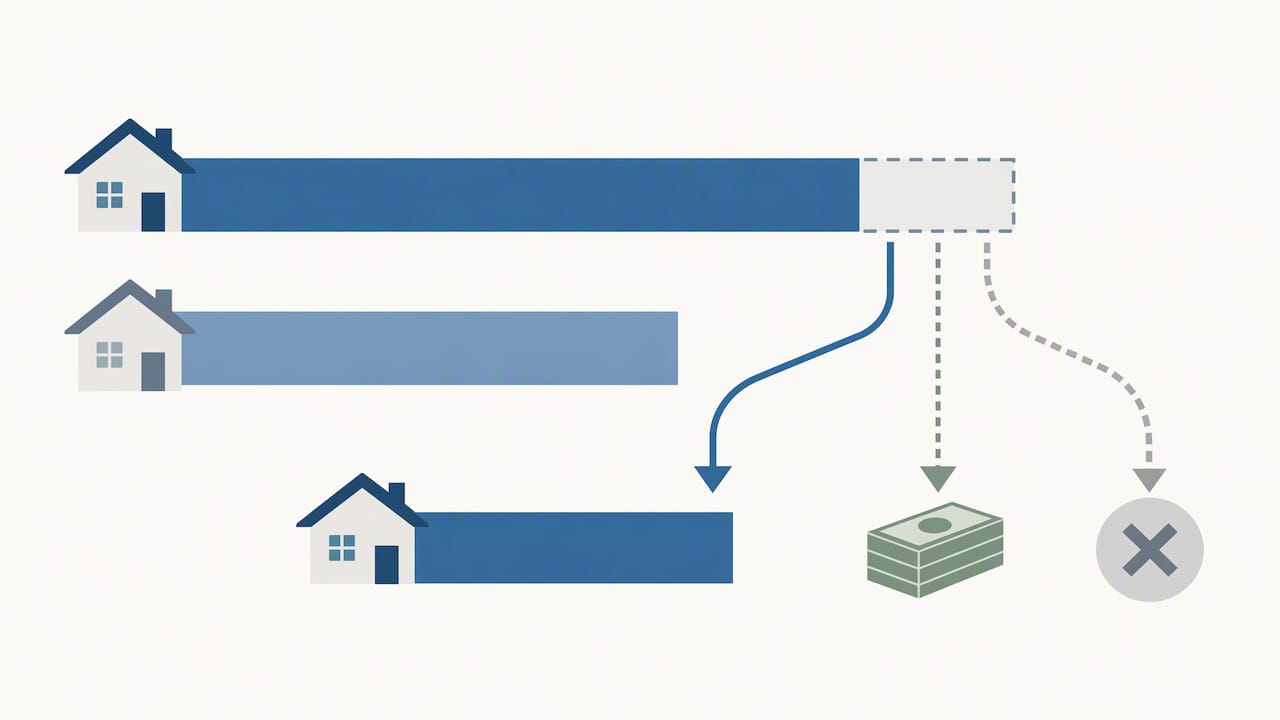
If the appraisal comes in below the agreed price, you have three practical paths, according to Freddie Mac’s appraisal guidance. You can ask the seller to reduce the price to match the appraised value, bring additional cash to cover the gap, or exercise an appraisal contingency to exit the contract if one was written into your offer.
How sellers should handle counteroffers and multiple-offer situations
When more than one offer arrives, your choices multiply, but so does the risk of mishandling the process. NAR’s guidance on multiple-offer negotiations outlines the main strategies sellers and their agents use:
- Accept the strongest offer outright when terms, price, and buyer qualifications all align.
- Invite a best-and-final round from all interested buyers when offers are close in value but you want to see final numbers before deciding.
- Counter one offer while holding others in reserve, which keeps a backup in play if the first negotiation falls through.
- Reject offers that fall short on price, financing strength, or contingency terms that create too much risk.
Structuring your counter matters as much as choosing who to counter. A counter that raises price slightly while also shortening the inspection period, requiring a larger earnest money deposit, or tightening the closing timeline builds certainty into the deal, not just dollars.
REALTORS® representing sellers carry a disclosure obligation under the NAR Code of Ethics, which requires presenting all offers and counteroffers promptly and fairly, even when a seller is leaning toward a particular buyer. That obligation protects every party from being blindsided later.
A marginally higher offer isn’t always the better one. A buyer with full financing approval, no home-sale contingency, and a realistic closing date often beats a higher bid that depends on a shaky mortgage or a contingent sale. Closeability is its own form of value, and experienced sellers weigh it alongside price.
Contingencies, appraisals, and escalation clauses: practical responses
Appraisals and contingencies decide whether a signed contract actually makes it to closing, so treat both as negotiation tools, not formalities.
When an appraisal comes in under the contract price, the lender reduces the loan amount to match it, according to Freddie Mac. From there, buyers typically request a price reduction backed by comparable sales, add cash to bridge the gap, or invoke an appraisal contingency to exit if the contract includes one.
Contingencies only protect you when their deadlines are firm. According to one contingency guide, vague or missing deadlines create legal ambiguity and can put earnest money at risk if a dispute arises over timing.
Before using an escalation clause, run through this checklist:
- Confirm your agent has verified that competing offers are genuine, not implied.
- Set a cap you can actually finance, not just one that wins the bid.
- Require documentation of the competing offer’s terms before escalating further.
- Understand that an escalation clause reveals your ceiling price to the seller, which regulatory guidance on escalation clauses flags as a risk if a seller or agent isn’t acting in good faith.
Pro Tip: Ask your agent directly whether a competing offer triggering your escalation clause is documented in writing, not just mentioned verbally.
Research-backed negotiation tactics that improve outcomes
Negotiation research offers a few consistent patterns worth applying directly to real estate counters.
- State constraints, skip the criticism. Buyers who explained financial limits persuaded sellers more effectively than those who pointed out flaws in the property, based on findings from Harvard’s Program on Negotiation.
- Timing changes outcomes. A large-scale study of asynchronous negotiations found that counteroffers submitted later in the response window often led to more favorable final prices and a lower risk of impasse, while highly ambitious counters lowered the eventual price but raised the chance talks would break down entirely.
- Silence has value. A brief pause before responding, rather than an immediate counter, preserves bargaining power and signals that you’re evaluating the offer seriously rather than reacting.
- Match ambition to risk tolerance. If walking away costs you little, an ambitious counter makes sense. If you need the deal to close, a more accommodating counter reduces impasse risk.
Industry-specific considerations for counteroffer strategies
Counteroffer dynamics outside real estate follow a similar structure, and the parallels are worth noting for readers managing a job change alongside a home purchase. In staffing and recruiting, a counteroffer from a current employer trying to retain a departing employee works much like a seller’s counter: it resets the negotiation, introduces new terms, and forces the other party to reevaluate everything, including trust.
Compensation counters in a hiring process typically involve the same negotiable items as real estate: base number, timing (start date flexibility), and non-monetary terms like remote work or title. Candidates evaluating a counteroffer from either their current employer or a new one benefit from the same discipline buyers use with sellers: confirm the terms in writing, check the real constraints behind the number, and respond within whatever deadline has been set.
For employers and hiring managers navigating these moments, understanding how counteroffers alter commitment and trust matters as much as the number itself. Our staffing and recruiting guidance on attracting and retaining talent covers how competitive counters affect candidate decisions during an active search.
Impact of counteroffers on long-term relationships between parties
A counteroffer exchange that stays professional rarely damages the relationship between buyer and seller, even when the final terms favor one side more than the other. What causes lasting friction is usually tone, not substance: disparaging the other party’s position, missing agreed deadlines, or renegotiating terms that were already settled.
Buyers and sellers who end up closing together often continue interacting after the sale, whether through a home warranty claim, a neighborhood connection, or a repair dispute that surfaces post-closing. A counteroffer process built on clear communication and documented terms tends to leave both sides more willing to cooperate if something comes up later.
The same pattern holds in employment negotiations. A counteroffer handled respectfully, whether from a current employer trying to retain someone or a candidate pushing back on initial terms, tends to preserve goodwill even when one side doesn’t get everything it wanted. A counteroffer handled poorly, with ultimatums or unexplained reversals, can sour a relationship before it even starts.
Examples of successful and unsuccessful counteroffer scenarios
A successful counteroffer usually looks unremarkable from the outside: a buyer states a specific financial constraint, the seller adjusts one or two terms in response, and both sides sign within the stated deadline. One common version involves a buyer countering a seller’s price increase by pointing to a firm appraisal cap, with the seller agreeing to split the difference in exchange for a shorter inspection period. Nobody walks away feeling cornered, and the deal closes on schedule.
An unsuccessful counteroffer often involves one side trying to extract too much at once. A buyer who counters a reasonable seller response with a lowball price, an extended closing date, and a request for extra repair credits risks signaling bad faith, prompting the seller to accept a competing offer instead. Similarly, a seller who counters every buyer’s offer identically, without regard to financing strength or contingency terms, often loses the most qualified buyer to a competitor willing to move faster.
The difference between the two outcomes rarely comes down to the dollar amount alone. It comes down to whether each counter respected the deadline, stated its reasoning clearly, and left room for the other side to agree without feeling like they lost.
Author perspective: negotiating with composure and agency
Every successful counteroffer we’ve seen shares one trait: the person making it stayed calm enough to think clearly about deadlines, not just dollars. Freddie Mac’s own guidance echoes this, advising buyers to keep composure and lean on their agent’s expertise rather than negotiating on instinct alone.
Write down every deadline the moment you receive a counteroffer, and confirm your financing before you respond to anything. A dependable agent who tracks these details for you is worth more than any clever tactic.
— Bradford
FAQ
How do I make a counteroffer?
Review the original terms, decide which specific items you want to change (price, closing date, contingencies, or credits), and put your revised terms in writing with a clear response deadline. Submitting a counteroffer voids the prior offer, so confirm your financing and contingencies still hold before sending it, as outlined in Redfin’s counteroffer guide.
What is the 3-3-3 rule in real estate?
The 3-3-3 rule isn’t a standardized legal or industry term, and definitions vary depending on who’s using it. Some agents use it informally to describe a rough pattern of three days to review an offer, three days for inspections, or similar short windows, but there’s no single authoritative source that defines it this way.
Is accepting a counteroffer a good idea?
Whether to accept depends on whether the revised terms still fit your budget, timeline, and risk tolerance, not on pressure to close quickly. Since a counteroffer is a new offer, treat it with the same scrutiny you’d give any new deal, confirming financing and contingencies before you sign.
How much should I counter offer on a house?
There’s no fixed percentage that applies across every market, since the right counter depends on comparable sales, appraisal data, and how competitive the listing is. Buyers who ground their counter in a specific, verifiable constraint, such as an appraisal figure or loan cap, tend to see better results than those who counter based on a round number alone, based on findings from Harvard’s Program on Negotiation.
What happens if the appraisal comes in low after I’ve already countered?
If the appraisal lands below the agreed price, your lender will reduce the loan amount to match it, and you’ll generally have three options according to Freddie Mac: ask the seller to lower the price, bring extra cash to closing, or exit through an appraisal contingency if your contract includes one.
Looking ahead: putting the playbook to work
Counteroffers reward preparation more than confidence. Whether you’re buying, selling, or managing a hiring negotiation that mirrors the same dynamics, the pattern holds: confirm the terms, state your constraints plainly, and respond before the clock runs out.
If you’re building a team and want negotiations handled by people who do this daily, our direct hire and executive search services connect you with pre-screened candidates matched for fit, so counteroffer conversations with candidates happen less often and go smoother when they do. We also offer contract staffing and project-based staffing for teams that need flexibility without the back-and-forth of a traditional hire. Reach out through our employer portal to see how fast we can get qualified candidates in front of you.
If your counteroffer involves comparing take-home pay across job offers rather than home prices, this salary comparison tool can help you model the numbers before you respond. And if a contract dispute around compensation terms needs legal eyes, this executive compensation guide covers what to expect from a consultation.